Should you nuke your mortgage?
NZ Herald – 28 March 2026
Darcy Ungaro looks at how to retire with choices and a roof over your head.
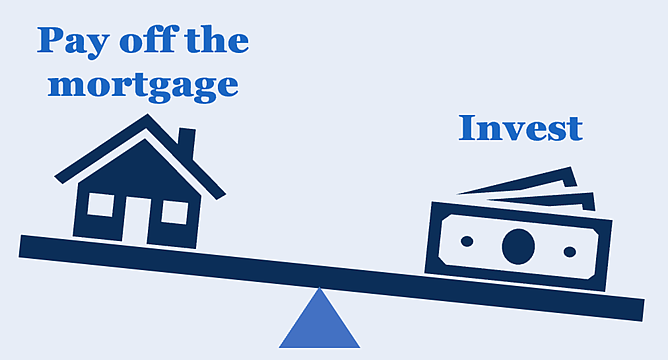
The pathway to retirement bliss is often harder when your sole focus is nuking the mortgage. If you're a homeowner, you might need to choose which freedom you value more—a debt free roof over your head or strategy that keeps the lights (and life) on.
Many Kiwi retirement plans are made-up of three ingredients: a home, NZ super—and a gap between. A single person on NZ Super gets a bit over $500 a week, while couples receive almost $800 combined after tax, depending on their exact situation.
Maybe it's fine for some, but for many, this barely qualifies as survival. Forget gifts for the kids, home improvements and travel beyond the garden. If there's still a distance between your working life in retirement, and you're throwing everything you can at the mortgage, take this as a wake-up call. What do you really want in retirement—a debt-free home, or a lifestyle? If you are forced to choose, look at the options.
OPTION 1: SMASH THE MORTGAGE
Every dollar you shave off the home loan now, above the bare minimum, gives you an after-tax return equal to your mortgage rate. If you think of this as an “investment”, your return might match that of some balanced share portfolios.
If you can “retire” the mortgage before you finish work, you're also freeing up more cash flow to build reserves useful in the fight against retirement poverty.
“Pay off the mortgage, then invest” is also a strategy to help you dodge and uncertainty. It feels safer than investing, because it's easier to imagine what you end up with at age 65.
It's a nice approach, but it falls down badly on one key point: concentration risk. When most of your wealth sits in the house, you might end up equity rich but cash poor. You're wealthy on paper but there's not enough to fill that gap and live a life with choices.
OPTION 2: INVEST AND CHILL WITH A HOME LOAN
Keeping your mortgage manageable while putting more money into markets might make alliterative and financial sense. By investing more than the bare minimum into KiwiSaver and other investments now, you reduce concentration risk, and you give your wealth and opportunity to grow for reasons other than house price inflation.
This means you're better prepared for a future where your costs will keep rising, and your home value doesn't. Not being so determined to repay the mortgage also helps create capacity to fill another bucket of wealth that you can one day used to repay the outstanding mortgage, anyway.
You've simply created another way to fund living costs at retirement without selling your home. The point is, you have the choice, and if you were selling the home to downsize anyway, does it really matter if there's a small mortgage at retirement?
The drawback with this strategy, of course, is that you're not debt-free in retirement, and that needs careful monitoring. If you can tolerate market swings and stick to a plan, however, this “pay the minimum, invest the surplus” strategy might be more efficient. But, let's be clear: this only works if you're actually investing, avoiding the “lifestyle creeps”, and you stay invested, even through oil shocks and other uncertainties.
Not confident that's you? Refer to option 1 or keep reading.
OPTION 3: THE HYBRID APPROACH
It's rare to find options where you can have the cake and eat it with retirement planning, but this might be the exception.
Stick with option 1 and aggressively reduce your mortgage but do it in a way that gives you access to your home equity later, if you need it.
By converting any outstanding mortgage balance into a revolving line of credit, or offset mortgage facility, you can still repay it, but you've just created the possibility of drawing it down again later.
It's important to get advice on this before acting, but this is effectively a “poor-man's reverse mortgage”. Subject to bank criteria at the time, you can still arrive at retirement mortgage-free, but you've quietly pre-built a back-up plan to solve the equity-rich yet cash-poor problem.
Actual reverse mortgage and equity release solutions aside; This might be perfect for those keen to minimise costs and interest rate risks, without locking it all into bricks and mortar.
So what should you do?
If your only goal is to make sure interest rates can't ever turf you out on the street, then yes: paying off the mortgage as fast as possible is a rational choice.
But if you also need an income engine to bridge that gap between NZ super and your actual lifestyle, you're better off asking yourself the question: “What mix of debt reduction, investing and future access to home equity gives me both security and lifestyle choices at 65?”
John Tonkin: My approach to debt reduction is option 2, however, in my view you need to be employing a growth investment approach otherwise this does not stack up. This means that over time the net return on your investment is equal or greater than the cost of your debt. You should have at least a 7-year time horizon for this.