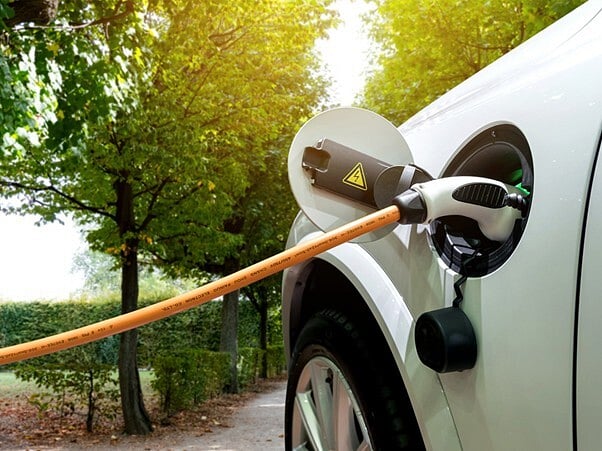
Petrol crisis is seeing many drivers eyeing a green alternative
Nadine Higgins - Herald on Sunday. March 29, 2026.
If you're having a coronary every time you visit the petrol station, you're probably — like me — considering whether now is the time to buy an electric vehicle. The last fill of our family car cost $200 (after four stops to even find fuel when the tank was empty — a new kind of range anxiety).
I am the last person you should turn to for car advice (as evidenced by the fact I recently put petrol in my husband's diesel car and drove away, oblivious...) but a vehicle is a significant financial decision, and that's where I can help.
How much could I save?
I've gone down a modelling rabbit hole and have found there are SO many variables to consider — the cost of fuel, electricity, vehicle efficiency, purchase price, financing, resale value and your behaviour. I can't give you one neat answer, but I'll try to keep it simple, which means I’ll need to make a few assumptions — please don't skewer me for them!
Let's start with fuel cost savings. Let's say you buy one of New Zealand's top selling EVs — the Tesla model Y.
If you drove 15,000km a year, based on data from EVDB.co.nz (which is a fantastic EV comparison site) it would cost you between $396 and $792 a year to charge at home (off-peak versus peak power). That sounds incredible, right?!
Compare that to a petrol SUV of a compatible size — I’ve gone with the Hyundai Tucson (slightly smaller than the Tesla). If it consumes around 8.2 litres per 100km at — for arguments sake — $3.56 a litre, it will cost you just under $4100 a year to fuel.
But before you get too excited, remember that battery electric vehicles (and plugged- in hybrids) are now subject to Road User Charges. Factor in about $76/1000km for RUCs and the Tesla now costs between $1460 - $1856 a year to run. So, smaller differential, but even at its most expensive, running the Tesla is less than half the cost of the Hyundai.
There are a tonne of other variables that can affect the calculations, including using public chargers (which can be up to two-three times the price of charging at home), whether you install a charger, your location, power plan, and RUC admin fees. But I'm trying to keep it simple!
The payback period
Fuel savings are great, but you have to buy the vehicle first. If you take the two models I've compared above, there's a $21,900 difference in starting price. Therefore, it would take at least 7.8 years of fuel cost savings to recoup that upfront premium (before considering things like the time value of money).
Of course, you don't have to buy a Tesla! However, other compatible electric SUVs on the EVDB website were priced similarly — the cheapest being $63,990.
Size down though, and things change. There's a less than $6000 difference between a BYD Atto 3 and a petrol Mazda CX5 — so the payback period shrinks to 2.5-3 years.
I'm no car expert, so my vehicle comparisons likely won't be perfect. But the point is, there does still tend to be a premium to buy an electric vehicle — and that's crucial to your calculations, not just fuel savings.
Of course, the pricier fuel gets, the more the ledger tips in favour of electric. Plus Jonathan Sergel, the AA's chief mobility officer, tells me this week on The Prosperity Project podcast that the price gap is rapidly shrinking.
“If you'd asked me that question two, three years ago, there was still quite a substantial difference between like-for-like vehicles, but as technology has moved on and different types of vehicles have entered our market — particularly Chinese-manufactured EVs — you've seen price points come down considerably.”
Financing mistakes
I've had a few people proudly declare they’ve put an EV “on the House” utilising a green loan. There partially right to gloat — most banks are offering super-sharp interest rates, either 0 or 1%. You don't need me to tell you that's a great rate (especially if your alternative is circa 9% vehicle finance).
But — and isn't there always one of those — do not overlook the term. The interest rates are valid for three to five years, at which point they must either be repaid, or they revert to the prevailing mortgage interest rate at the time.
Pay it back within the term and it's cheap finance. Let it roll into your 25-year mortgage and you could wipe out your fuel savings through interest costs.
What about the battery?
Replacing the battery seems like one of the biggest cost anxieties people have about EVs.
However, the AA’s Jonathan Sergel says not only has the cost come down considerably, but real-world data is encouraging.
“Some taxi companies in North America that have been using Teslas for the last eight years have got over a million kilometres out of their battery and it's showing a state of health in the 70 to 75% range.”
EVDB.co.nz also suggests it's “extremely unlikely that a new EV bought today would ever need its battery replaced (except for a fault)”.
To my mind, a car is more often a money pit than it will ever be a wise financial decision in its own right.
But EVs are clearly cheaper to run — so if you can keep the price premium to a minimum, charge mostly at home, and avoid financing mistakes — it could be a decision that pays off.
John Tonkin: I agree with Nadine’s analysis, one area she has not commented on is the difference in maintenance costs. While new petrol-powered cars initially have low maintenance costs these can ramp up over time, especially if something major occurs like the need for a new cam belt, fuel / water pump. Around a year ago we purchased a BYD Atto on a 1% green loan through our bank. Due to the modest distance it travels each day we charge it via a standard power point in our garage a couple of time a week. We are pleased with the car and I would recommend you consider purchasing one when you come to replace your car.